
Grade 2 titanium field watch. Foil dial.
A dial made from satellite skin.
- Hand-finished dials
- Made to order
- Assembled in USA
- $450–599
Aluminized polyimide.
The amber insulation from the outside of spacecraft, finished by hand and sealed under sapphire. No two fold the same way, so no two dials are alike.
Grade 2 titanium field watch. Foil dial.
A dial made from satellite skin.
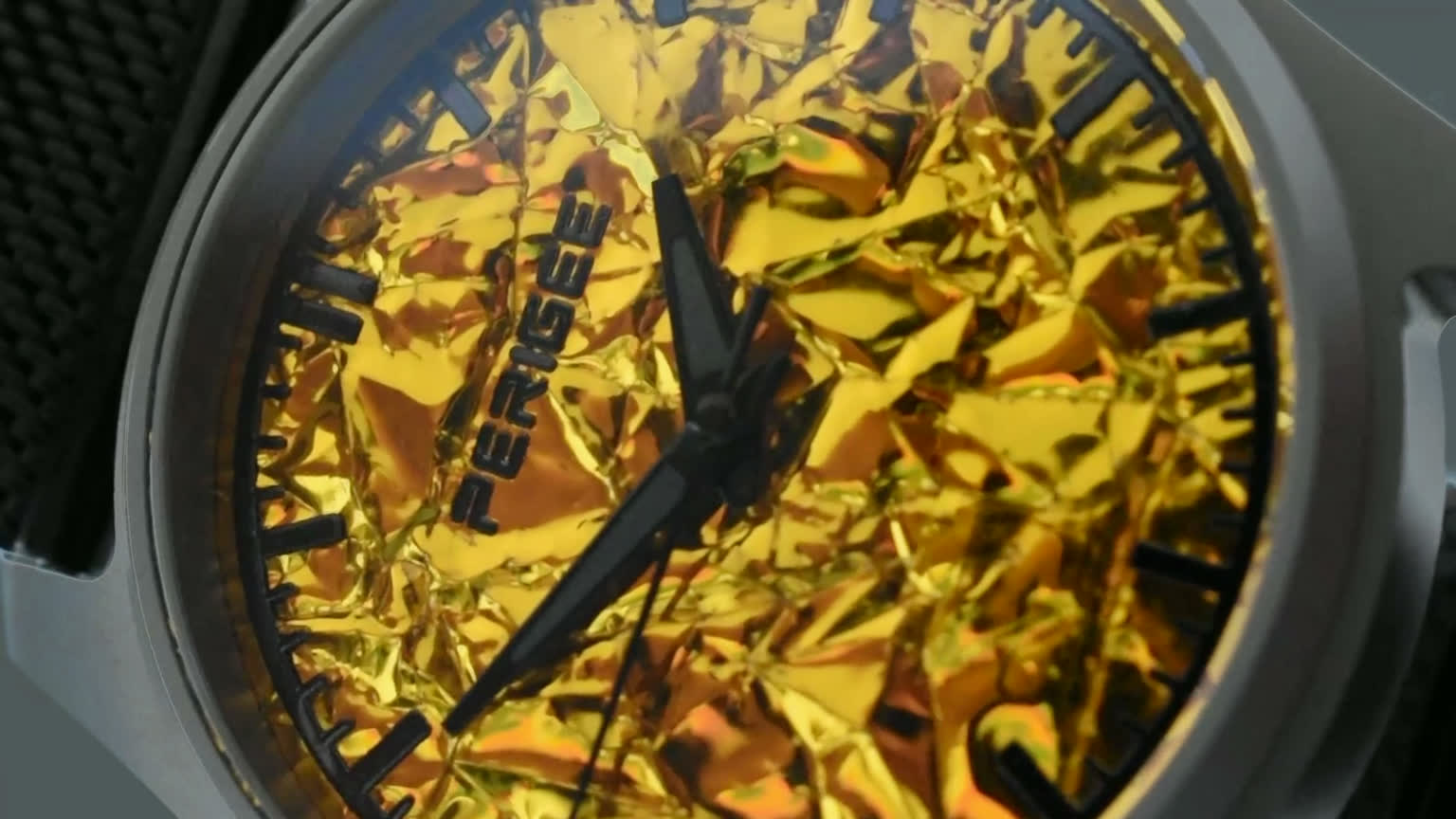
01 Dial
Aluminized polyimide.
The amber insulation from the outside of spacecraft, finished by hand and sealed under sapphire. No two fold the same way, so no two dials are alike.
Seiko NH38.
A Japanese automatic. No date, so the foil runs uninterrupted.
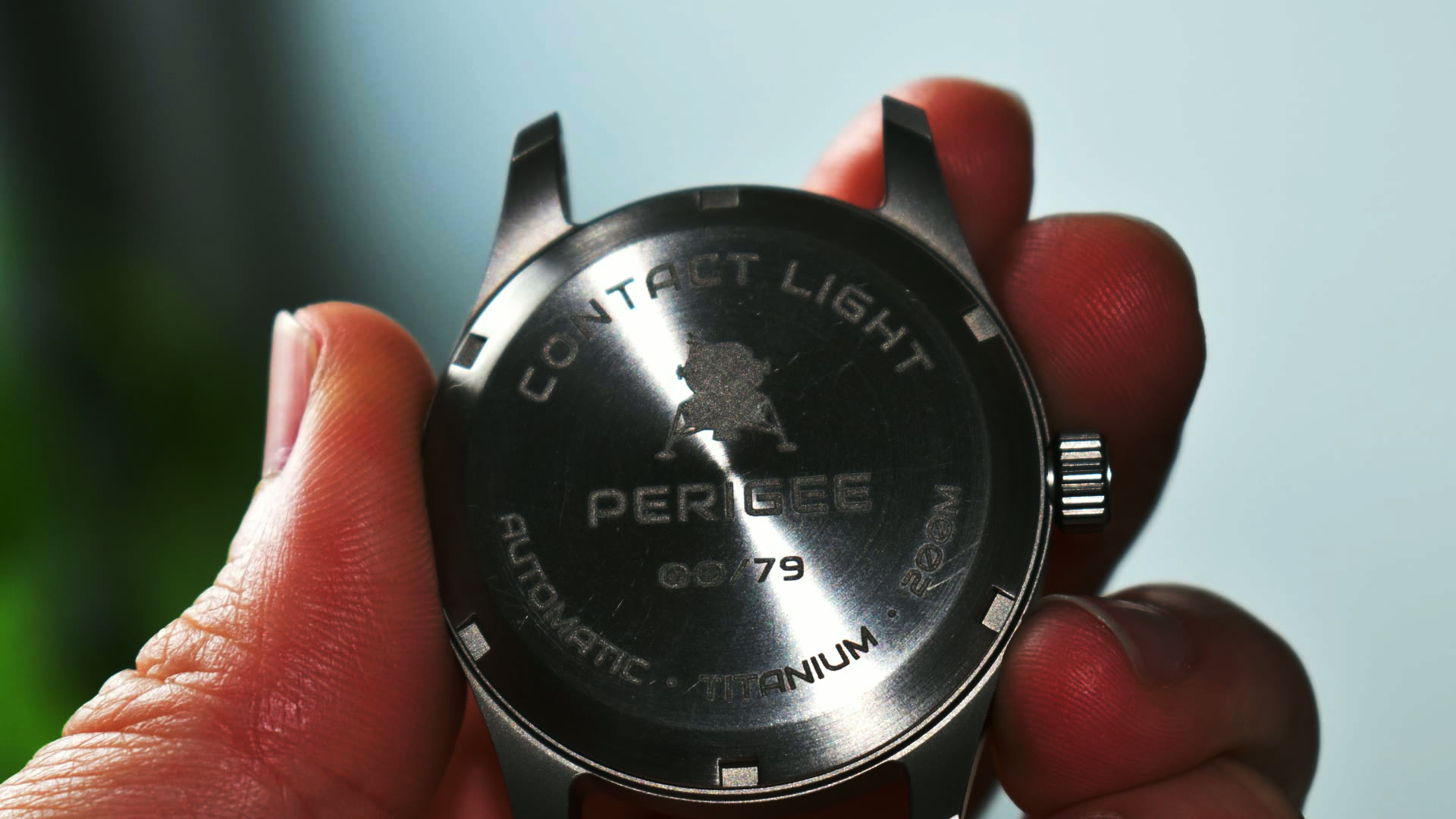
02 Caliber
Seiko NH38.
A Japanese automatic. No date, so the foil runs uninterrupted.
The watch
Contact Light
39 mm Grade 2 titanium. Sapphire, anti-reflective coated. $450–599, expected
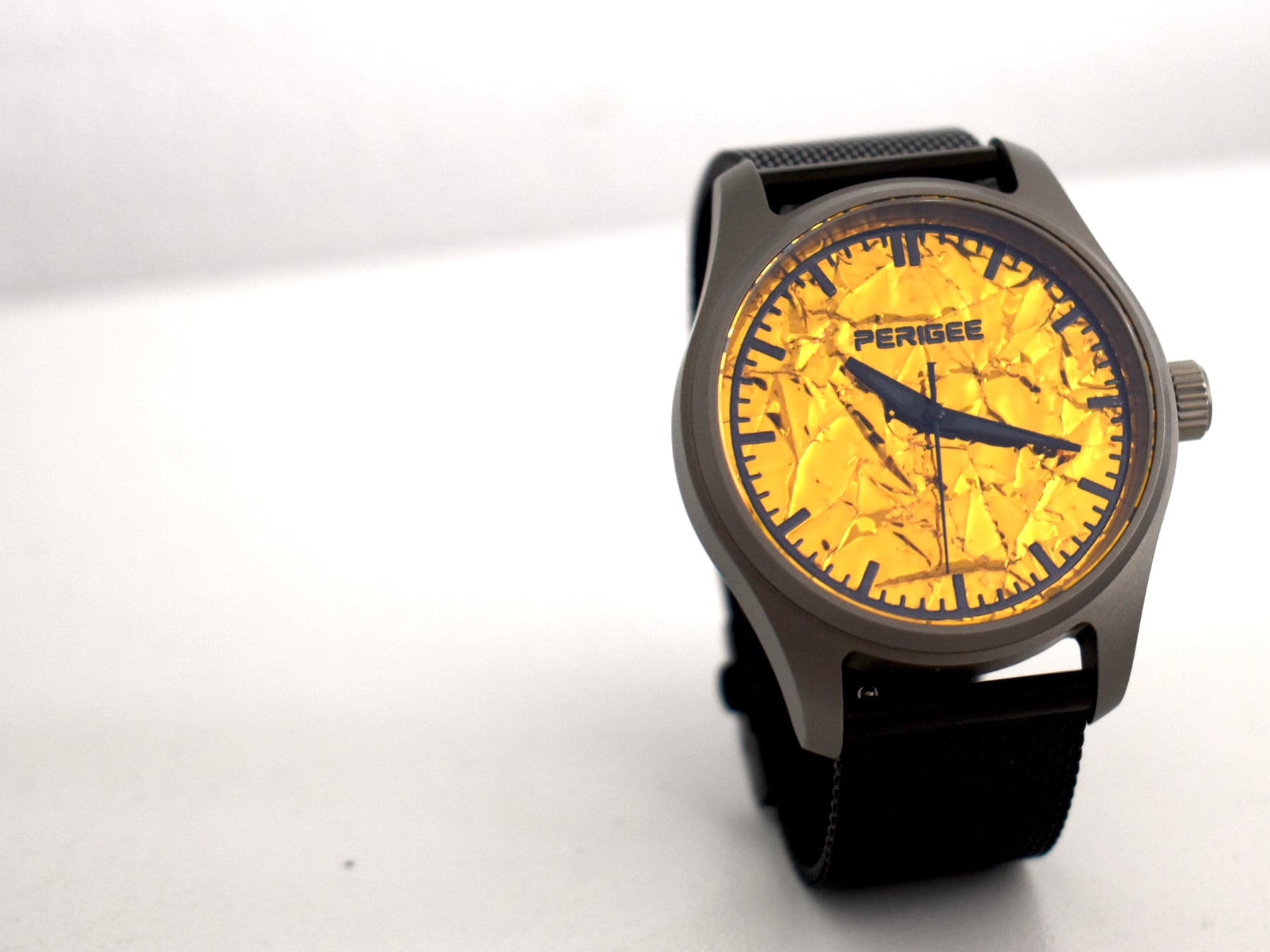
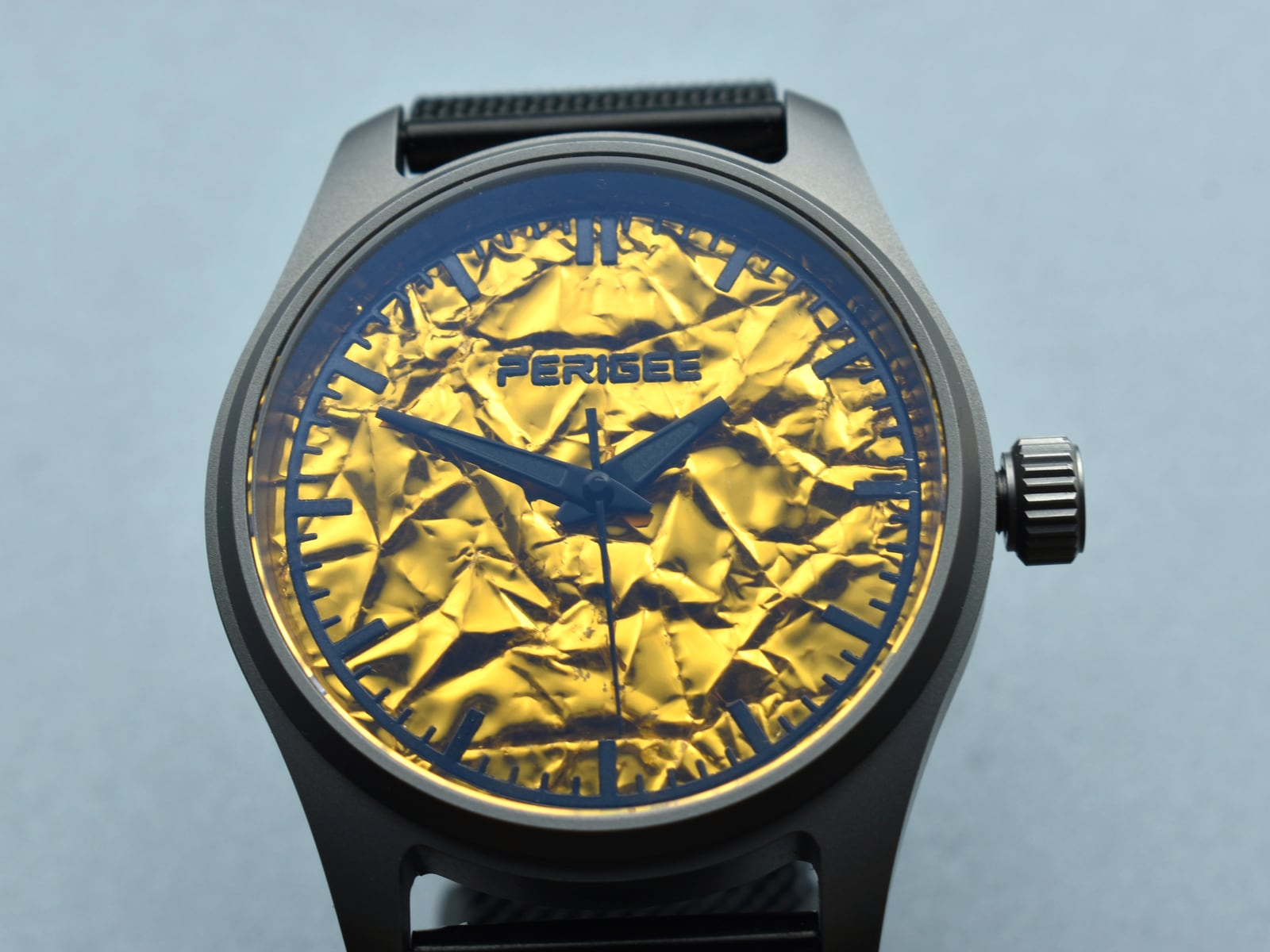
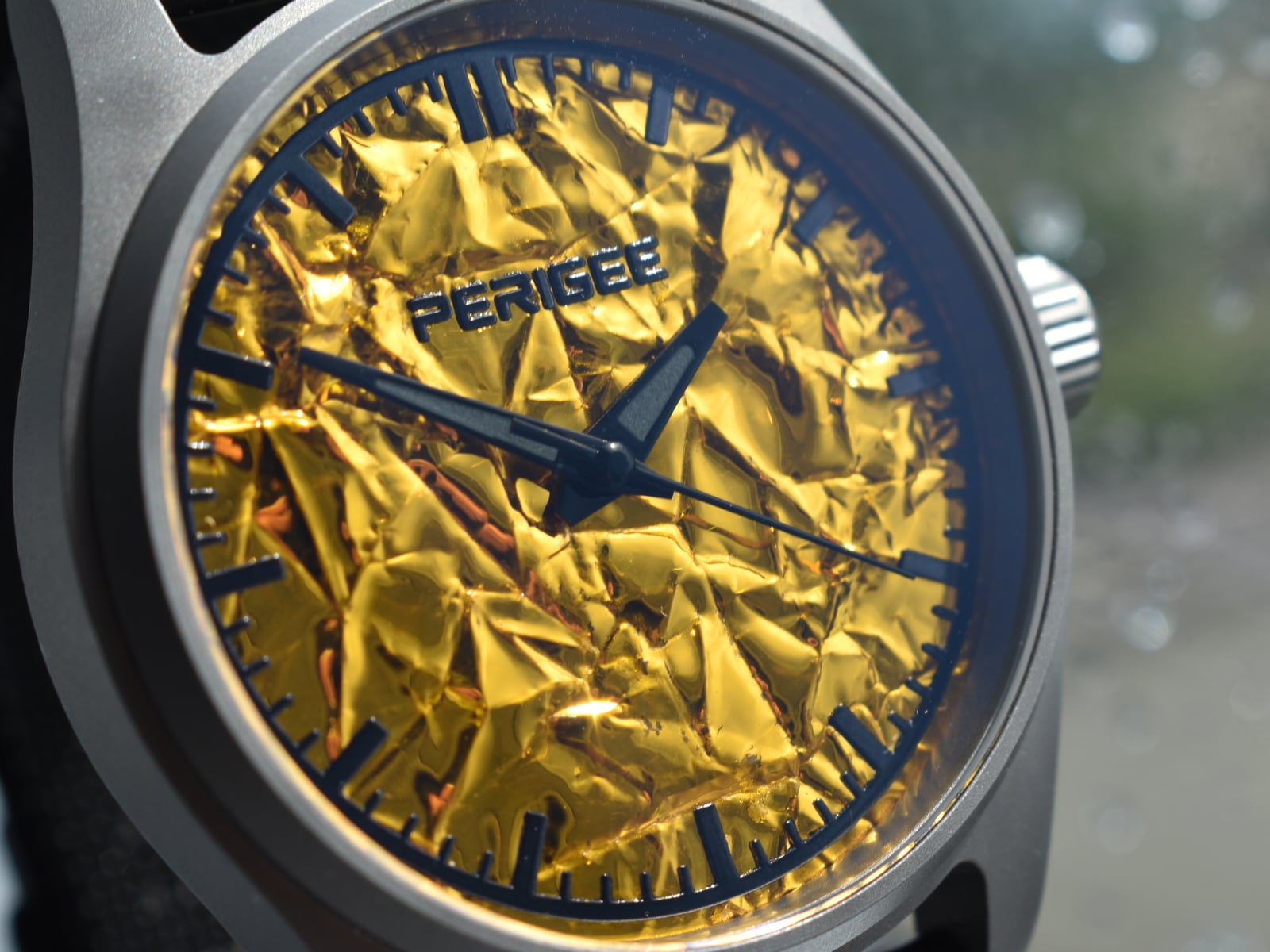
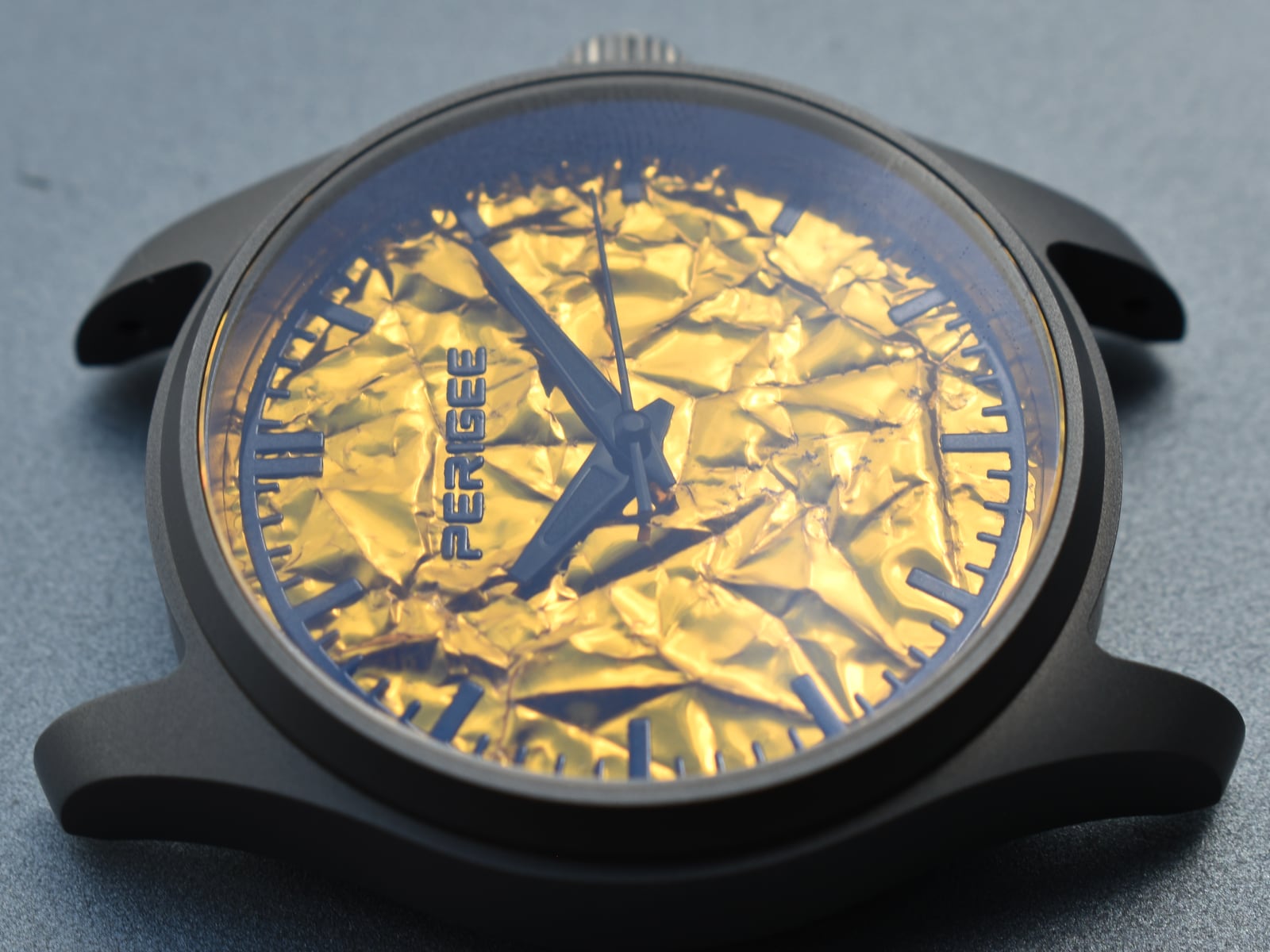
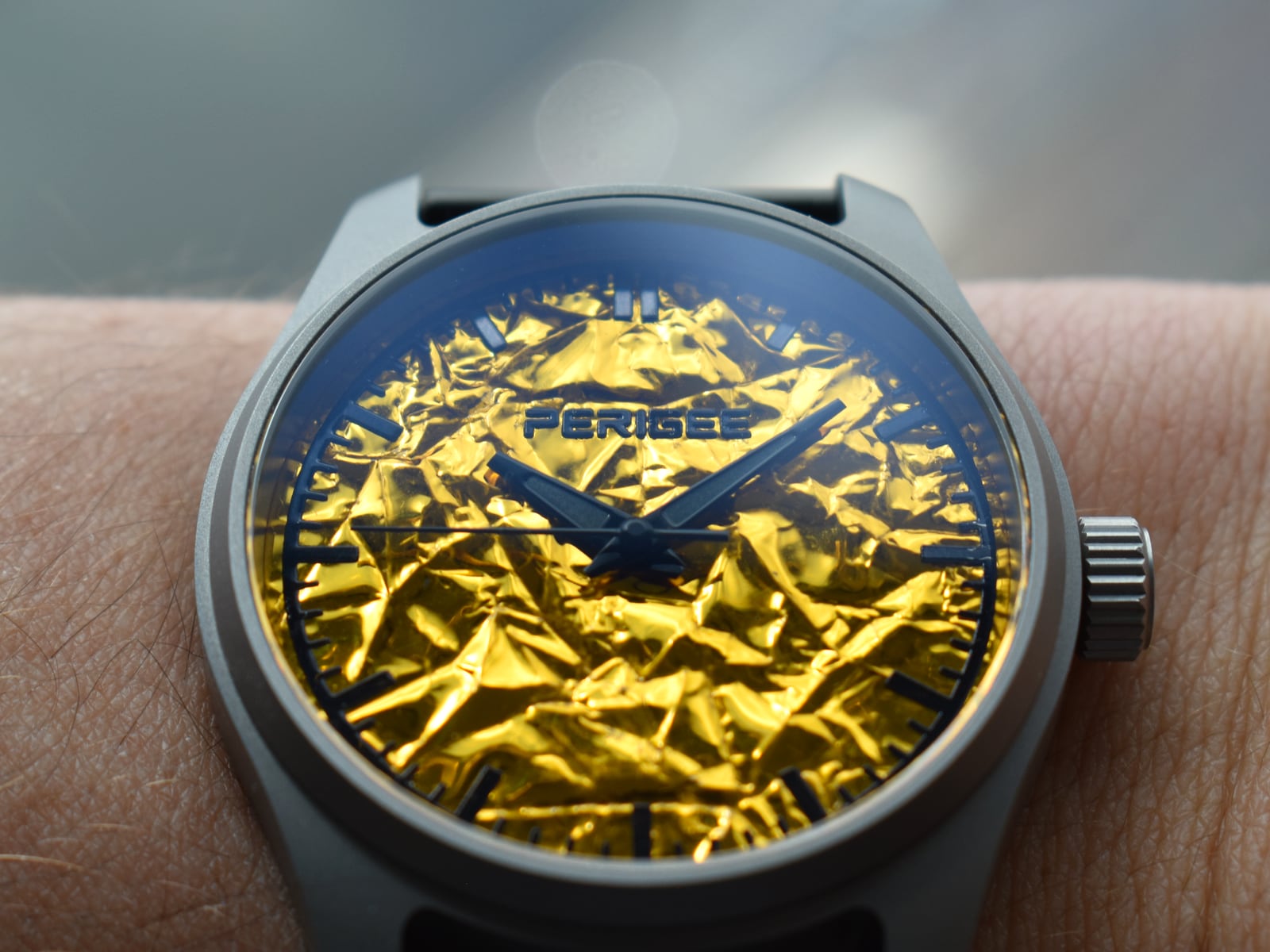
Photographs of the first finished watch, not renders. Every dial is finished by hand, and the crease and fold pattern is different on each one, so yours will catch the light its own way.
PERIGEE
Contact Light
A 39 mm Grade 2 titanium field watch. The dial is real aluminized polyimide, the foil used on the outside of spacecraft, finished by hand and sealed under sapphire. The creases and folds fall differently every time, so no two are alike.
“Contact light” was the call from Apollo 11, the instant the lander’s probe touched the Moon.
$450–599
Expected price. Nothing is charged today.
- Dial
- Aluminized polyimide MLI, hand-finished, perimeter-bonded
- Case
- 39 mm Grade 2 titanium
- Crystal
- Sapphire, anti-reflective coated
- Movement
- Seiko NH38, a Japanese automatic
- Water resistance
- 200 m (20 bar), case rating
- Assembly
- Assembled in USA
- Edition
- Made to order, numbered by hand
Case dimensions
- Diameter
- 39 mm, excluding crown
- Thickness
- 12 mm
- Lug to lug
- 48.6 mm
- Strap width
- 20 mm
- Crown
- Screw-down
Dimensions are the case maker’s. The water rating is for a sealed case: I open every one by hand to fit its dial and reseal it, so treat it as a case rating, not a tested depth. Specification may change before the first run ships.
Join the waiting list
Orders open Summer 2026. Every watch is made to order, one dial at a time. Leave your email and I'll write once, when they open.
- Made to order, one dial at a time
- Assembled in the USA
- Sold only on this site
The rest of it
Where the dial comes from.
The foil is not a finish or a print. It is the same insulation that wraps spacecraft, bought off an aerospace roll, then cut, folded and bonded by hand. Here is what that means, and how a dial gets made out of it.
02 · The foil
The foil.
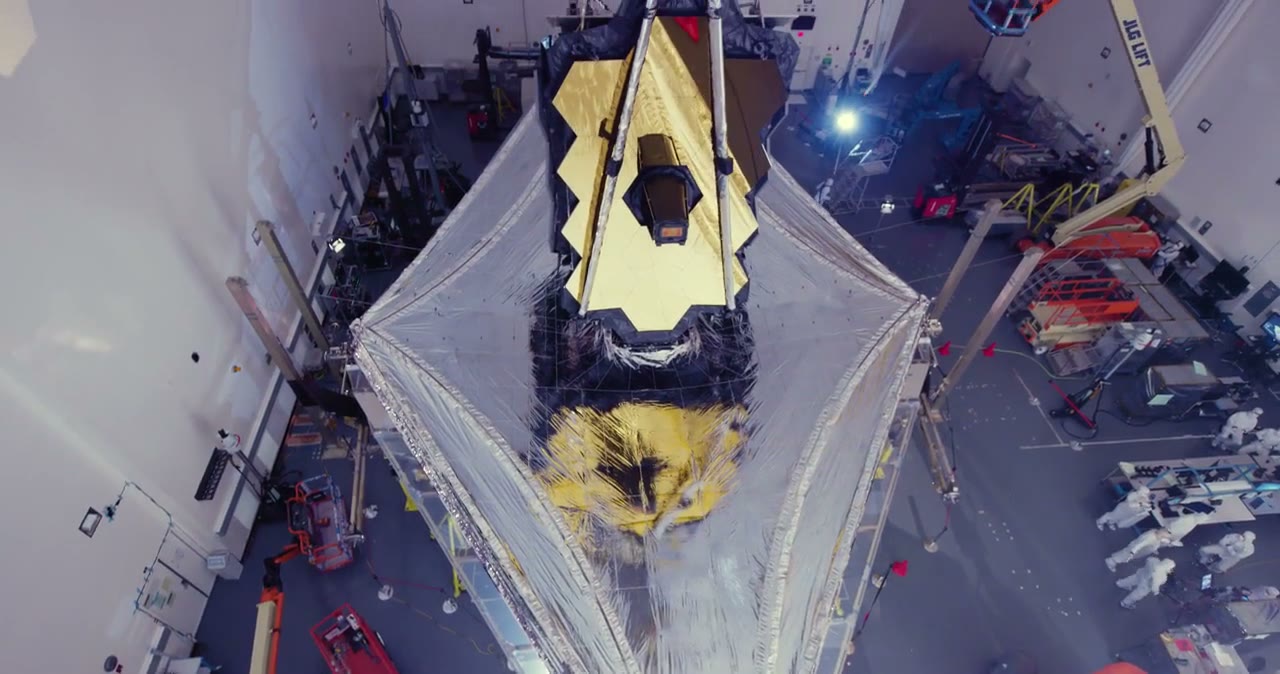
Each dial starts as a sheet of aluminized polyimide, the amber-gold multi-layer insulation that wraps spacecraft. The film on this page is NASA's own.
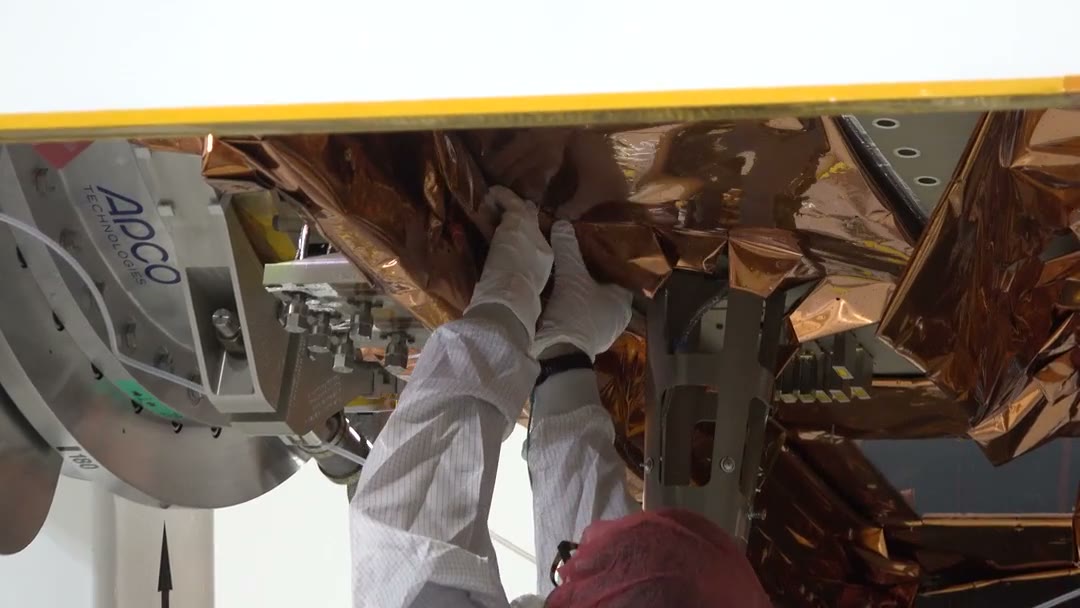
The foil is cut oversize, then folded.
- 01 Cut
The foil comes off an aerospace roll and is cut oversize, mirror side down.
- 02 Fold
Folded by hand until the surface holds a grain. Too far and it creases; not far enough and it reads flat.
- 03 Bond
Perimeter-bonded with a low-outgassing acrylic adhesive, so no glue shows through the front.
- 04 Seal
Trimmed to the dial blank and sealed under sapphire.

04 · Datasheet
Genuine aluminized polyimide.
- Material
- Aluminized polyimide film, the multi-layer insulation that wraps spacecraft in orbit.
- Film
- 1-mil to 2-mil (0.025-0.05mm), aerospace surplus stock.
- Metallization
- Vacuum-deposited aluminum, one side only.
- Service temp
- Rated roughly -269°C to +400°C.
- Color
- The gold is the film itself. Aluminum faces inward, reflecting light back through it.
- Why crinkled
- Real MLI is crinkled so each layer barely touches the next, cutting conductive contact between them. Ours is made the same way. The creases and folds fall differently every time, so no two dials match.
The foil is cut, folded, bonded and marked by hand in the United States, one dial at a time, and every watch is assembled here. No two dials come out the same, because the creases and folds never fall the same way twice.
The blank under the foil, the case and the movement are all bought in. The movement is Japanese. The work on top of them is mine.